Vector search is a method of finding information by comparing numeric representation(vectors) of data instead of exact keywords.
In traditional search systems:
- Looks for exact keyword matches
- Struggle with synonyms and context
Incase of Vector search:
- Understand meaning and intent
- Works with text, images, audio and more
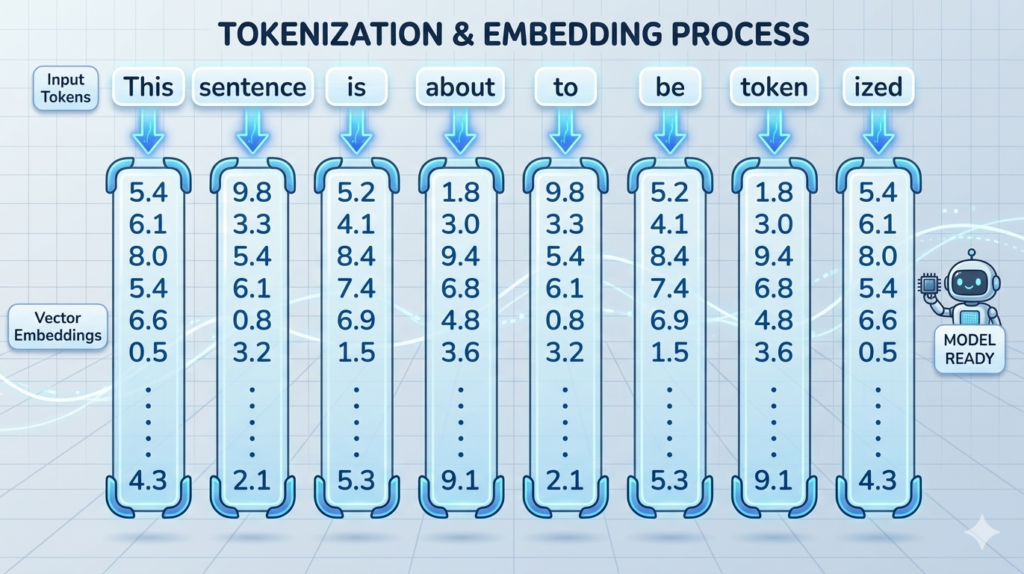
Vector search is built on a concept from Machine Leaning and Natural Language Processing. It convert data into vector (Array of numbers) that capture meaning.
How Vector Search Work
1. Data -> Embedding (Vector Conversion)
First, content is converted into vector using embedding models such as:
- BERT
- Word2Vec
Example:
"cheap smartphone" → [0.21, -0.44, 0.78, ...]These numbers represent meaning, context and relationships.
2. Storing Vectors in a Database
All vectors are stored in specialized system called vector databases, such as:
- FAISS
- Pinecone
These databases are optimized for fast similarity search.
3. Query Conversion
When a user seaches:
"budget phone"It is also converted into a vector using the same model.
4. Similarity Search
Now the system compares vectors using mathematical technique like:
- Cosine similarity
- Euclidean distance
The closer two vectors are the more similar their meaning.
5. Ranking Results
The system ranks results based on:
- Similarity score
- Context
- Relevance
And returns the most meaningful matches.
Example: Keyword vs Vector Search
| Query | Keyword Search | Vector Search |
|---|---|---|
| “cheap phone” | Only exact matches | Finds “budget smartphone”, “affordable mobile” |
| “car repair” | Exact phrase | Also finds “auto service”, “vehicle maintenance” |
Visual Flow
Text → Embedding → Vector → Compare → Similar ResultsTypes of Data Vector Search Can Handle
Vector search isn’t just for text:
- 📄 Text
- 🖼️ Images
- 🎧 Audio
- 🎥 Video
Example:
- Search images using text (“sunset beach”)
- Find similar songs based on sound
Vector search represents a shift from:
“matching words” → “understanding meaning”
It’s a foundational technology that makes modern AI systems smarter, faster, and more human-like in understanding information.